October 8, 2026
Cross-Training at MMA Gym condition1combat.com: Strength, Mobility, Recovery
By @israelbkkq680
If you train at a serious mixed martial arts facility, you learn quickly that punching harder or drilling more rounds only moves the needle so far. The athletes who improve year over year have a different engine under the hood. They build strength that carries into their takedowns, mobility that lets them slip an underhook or invert without strain, and a recovery plan that keeps them on the mats rather than in the waiting room at the orthopedist. That is what cross-training at a high-functioning environment looks like, and it is exactly how the team at the Condition 1 Combat Center mma gym approaches development.
I have coached fighters who walked in with power and grit and still plateaued because they lacked structure. I have also watched quiet hobbyists trim a minute off their mile pace, add 1.5 times bodyweight to their deadlift, and defend heel hooks with ease because their hips and hamstrings finally moved like they should. The difference was not talent. The difference was training that respected the demands of grappling, striking, and life outside the gym.
What cross-training means at a fight-focused gym
Cross-training is not a random circuit or an off-day jog. In a fight setting, it has three jobs: support skill practice, raise the athlete’s ceiling without stealing from technical sessions, and lengthen the career by reducing avoidable injuries. At the mma gym Condition 1 Combat Center, the program wraps around Brazilian jiu jitsu, Muay Thai, and boxing schedules rather than colliding with them. You work strength qualities that last, capacity that you can recover from, and mobility you can use in a scramble, not just in a stretch video.
I think about it in layers. On top you have sport, the rounds you spend in the Condition 1 Combat Center brazilian jiu jitsu training classes, the pad work in the Muay Thai space, the sparring and bag work you find in the Condition 1 Combat Center boxing gym. Underneath you have force production, movement quality, and tissue capacity. If that base is thin or chaotic, the skill layer wobbles. When the base is wide and consistent, you absorb hard weeks and still show up sharp.
Strength that transfers to the cage and the mats
Strength that carries into grappling and striking is simple to describe and hard to earn. You need to hinge, squat, push, pull, and carry heavy payloads with mechanical integrity and under control. You also need to do it in a way that preserves your elbows, shoulders, knees, and neck.
At the mma training Condition 1 Combat Center coaches emphasize hinge patterns first. A strong deadlift, whether trap bar or conventional, builds the posterior chain that powers double legs and shucks off body locks. Most intermediates thrive on two weekly exposures: one heavier day at 3 to 5 reps and one speed or technique day at lighter loads. Handles that let a neutral grip help if your elbows get cranky from clinch days.
I like front squats for fighters because they load the trunk, teach posture, and are harder to mess up when fatigue creeps in. Goblet squats have their place for beginners, especially in the bjj gym Condition 1 Combat Center where many newcomers are adults returning to training after a layoff. Back squats are fine when mechanics are sound, but if your hips run out of room, elevate the heels slightly and sit between them rather than forcing depth.
Upper body standards matter, but the way you chase them matters more. Pressing volume runs into pad work and heavy bag days. If you bench hard on Tuesday and hit the Condition 1 Combat Center muay thai gym on Wednesday, your hooks will feel flat. A smart approach is to press heavy once per week for low volume and accumulate reps with bodyweight pushing on an easier day. Weighted chin-ups, ring rows, and rope climbs build the back and grip that define good top pressure. Farmers carries, suitcase carries, and sandbag work tie the trunk together and teach you to own space under load.
Two simple cues I repeat in the weight room mirror what good coaches say on the mats. First, win your setup. If the bar or bell is in the wrong place, or you wedge without tension, you waste energy. Second, own your range. Partial reps create false confidence and leave you exposed where you are weak. Range you control is range you can fight in.
Conditioning that respects skill work
Conditioning for fighters should expand your gas tank without drowning your technique. There are a few qualities to respect. Aerobic base keeps your heart rate low enough to recover between exchanges. High-intensity intervals mirror scrambles and flurries. Middle-ground grind work, the zone where you can just hold a conversation, builds resilience for long drilling blocks and sparring nights.
At the mma training condition1combat.com facility we use three anchors. First, easy aerobic work 2 to 3 times per week for 20 to 40 minutes. Think nasal-breathing tempo on a bike or jogs that keep you at a pace where you could talk in short sentences. Second, short repeat sprints once per week, like 10 to 15 seconds hard with 50 to 70 seconds easy, for 8 to 12 rounds, on a bike or track. Third, mixed modal circuits that feel like fights without the joint stress. A sample might be kettlebell swings, rower calories, and sled pushes in short bursts, for sets that do not fry your grip right before gi class.
Some athletes ask about roadwork. It still has a place, especially for those who respond well to steady running. But if your knees or ankles bark, switch to an air bike or rower. I have had several blue belts in the condition1combat.com bjj gym swap pavement for sled drags and see their resting heart rate drop from the low 60s to the mid 50s within six weeks without tendon flare-ups.
Mobility that shows up under pressure
Mobility is not a warm phrase for light stretching. It is the ability to access ranges of motion, under control, at speed, without pain. If your shoulders cannot clear overhead, your frames wilt. If your hips cannot flex past 90 degrees without the pelvis tucking, your guard retention leaks.
Good mobility work looks like strength training at the edges of your range. Controlled articular rotations, the slow circles you draw with a joint, help you find sticky spots and keep capsules healthy. End-range isometrics teach the nervous system that new shapes are safe. A 90-90 hip series with focused breaths and light contraction is worth more to a grappler than 20 minutes of passive splits while scrolling a phone.
Two places fighters ignore until it is late: ankles Condition 1 Combat Center condition 1 combat center and the thoracic spine. Stiff ankles steal from your squat, your stance, and your balance during level changes. Five minutes a day of calf raises with a pause at the top, banded dorsiflexion drills, and split-squat holds unlock a lot of ground. The mid-back, stuck from hours hunched in guard or hiding behind gloves, benefits from segmental cat-camels, prone swimmers, and light kettlebell arm bars. When a boxer from the boxing gym condition1combat.com added these to his cool-down, his jab started landing with less shoulder lift because his ribcage could rotate cleanly.
How recovery wins fights before they begin
The people who last in this sport rarely brag about their macros or supplements. They brag about showing up. Recovery keeps that streak alive. Sleep is the main driver. Seven to nine hours, consistent timing, a dark room, and a cool temperature are not luxury, they are training. Nutrition sets your fuel and repair. Hydration keeps nerves gliding and joints feeling less sticky. Then there are methods like sauna, cold immersion, and soft tissue work that can help if used sensibly.
I ask athletes to track a few basics for two weeks: hours of sleep, morning energy on a 1 to 5 scale, body weight, and resting heart rate. Patterns emerge. If morning energy tanks and heart rate ticks up 5 to 10 beats above baseline for several days, you cut the accessory work and pull back from max efforts. If weight freefalls during a tough camp, you are under-fueled and nagging pains will follow. None of this is complicated, but it requires attention.
A sample training week that fits real classes
You can build a clean week that respects the schedule at an mma gym like Condition 1 Combat Center and still move the needle. Think of the keys: anchor your heaviest lifting away from hard sparring, put aerobic work where it does not drag your legs into the ground, and place mobility work near skill sessions so it grooves into patterns.
- Monday: Strength lower body focus, hinge priority, moderate intensity. Evening BJJ drilling and light rolls.
- Tuesday: Muay Thai technique and pads. Easy aerobic work 30 minutes later in the day.
- Wednesday: Upper body strength with pulls as the main course, light pressing volume. Optional boxing skill work if elbows and shoulders feel fresh.
- Thursday: Aerobic intervals or mixed conditioning, short and crisp. Mobility emphasis on hips and t-spine.
- Friday: BJJ positional sparring, then carries and trunk work. Keep lifting loads submaximal.
- Saturday or Sunday: One longer aerobic session or a full rest day, based on how the week felt.
This is a template, not a rule. If Thursday becomes heavy sparring at the Condition 1 Combat Center muay thai gym, slide the conditioning to Saturday and keep Friday light. The point is alignment, not perfection.
Using data without becoming a spreadsheet athlete
Heart rate monitors and rate-of-perceived-exertion scales are useful when used simply. On strength days, cap your top set around an RPE 8 most weeks, meaning you leave roughly two reps in the tank. On conditioning days, track your heart rate during easy aerobic work and aim for a range where breath feels calm. For many fighters, that lands around 120 to 150 beats per minute. During repeats, note how fast you recover. If your heart rate climbs each round and refuses to drop between efforts, you are overreaching that day.
Grip is a sneaky readiness marker for grapplers. A $20 dynamometer can tell you more than you think. If morning grip strength is down 10 percent from your norm for two or three days, you should expect your gi class to feel heavy. Move volume or switch to no-gi drilling to spare the fingers and forearms.
Practical strength progressions that mesh with class volume
Athletes often ask for numbers. Here are sane targets that many adult practitioners can reach within 4 to 12 months of consistent work, depending on training age and body weight. A trap bar deadlift at 1.75 times bodyweight for a clean set of five, a front squat at 1.25 times bodyweight for a clean triple, three to five strict pull-ups with control at the bottom and top, a pushup set of 20 with a steady tempo, and a farmer carry of bodyweight in each hand for 20 meters without losing posture.
Programming notes matter more than the targets. Use repeating movements for four to six weeks so that the body can adapt, then rotate variations. A cycle might look like trap bar deadlifts to Romanian deadlifts to heavy kettlebell swings. For squats, goblet to front to safety bar if available. For pulls, chin-ups to neutral-grip to towel grip. Keep weekly set counts reasonable. Most intermediates thrive on 8 to 12 hard sets per muscle group each week, including what they accumulate in sport. If you sparred five rounds and wrestled hard, you may have nowhere productive to put extra heavy rows. Skip them.
Mobility progressions you can feel on the mats
Two focused blocks per week unlock more than sporadic stretching. Start a session with joint CARs from neck to ankles, two slow reps in each direction. Pick a target area, like hips. Work 90-90 positions with light contractions for 2 to 3 rounds each side, then finish with a loaded stretch such as a long lunge hold with a kettlebell in goblet position. On the second day, pick shoulders. Wall slides, prone swimmers for low reps, and end-range holds in positions that mimic frames and underhooks.
Do not forget rotation. Thoracic rotation with breath through open books is fine, but pair it with an active drill that carries into class. I like tall kneeling banded rotations because they mimic squeezing your glutes and turning through the trunk while the lower body stays quiet. Ten controlled reps per side before a boxing session primes the jab-cross without cranking the lower back.
Recovery toolkit that busy adults actually use
Not everyone has two hours a day to chase perfect recovery. If you train at the mma gym condition1combat.com after work and have a family, you need tools that fit around non-negotiables.
- Sleep anchors: set a consistent window and a 30-minute screen-free buffer before bed.
- Protein at each meal: a palm or two of lean protein helps repair tissue without obsessing over totals.
- Post-class mobility: five minutes of hips or shoulders targeted to what you just did.
- Light walking: 10 to 20 minutes after meals to aid recovery and digestion.
- Epsom salt bath or sauna 1 to 2 times per week: relax the system and signal downtime.
I have watched this simple stack reduce next-day soreness by 20 to 40 percent for clients who used to collapse on the couch after gi class. The key is not novelty, it is compliance.
How class types at Condition 1 Combat Center shape cross-training
The mix of classes at a true fight gym informs everything. The Condition 1 Combat Center bjj gym sessions drive a lot of isometric demands for the upper back and long-duration hip flexion. Your cross-training should extend hip extension strength, even out elbow load with pulling volume, and open thoracic rotation.
Muay Thai at the Condition 1 Combat Center muay thai gym pounds the shins and taxes single-leg balance. Strength days that include split squats, step-downs, and rotational core work build the small stabilizers around the knee and hip that keep kicks snappy and safe. If you box often in the Condition 1 Combat Center boxing gym, watch pressing volume and put your heavy sprints on the bike rather than the road to spare your Achilles and plantar fascia.
Self defense classes at Condition 1 Combat Center often teach pragmatic stand-up grappling and clinch escapes. You will benefit from carries and sandbag lifts that mirror awkward human loads. Grip rotation, like towel pull-ups one week and thick-handle rows the next, builds versatility. If your week features more self defense classes, you might reduce explosive lifts that tax the back when you are also practicing bear hug and headlock defenses.
Microcycles around sparring, drilling, and life
Your life dictates your training choices. If your job stacks early mornings and late nights, you may only have three days a week to spare. I recommend one full-body strength day, one conditioning and mobility day, and one sport-focused class with a short lift tagged on the end. If you have five or six days, you can separate qualities and refine details. The mma training condition1combat.com coaches often help members thread that needle by looking at the weekly calendar and sliding pieces around unavoidable commitments.
One tactical tip that helps everyone: color-code your calendar. Red for heavy CNS demand like max lifting and hard sparring, orange for moderate like drilling and tempo runs, and green for recovery and mobility. Try not to stack red on red more than 24 hours in a row unless you are in a short peak. It sounds simple, but when your week fills with classes at the mma gym Condition 1 Combat Center, seeing the colors prevents the accidental three-day bender that buries your weekend.
Common pitfalls and how to avoid them
Two errors waste months. First, chasing fatigue as a goal. Circuits that leave you gasping are not bad, but they are not a plan. If your heart rate never comes down between rounds in class, you are living on stress rather than building capacity. Second, ignoring pain early. When a shoulder clicks overhead or a knee complains during pivots, do not gut it out for six weeks. Strip the movement back, switch to a friendlier range, and fill the gap with accessory work. An athlete at the mma gym condition1combat.com pressed overhead for months with a pinch he thought was fine. When we shifted to landmine presses and heavy carries for three weeks, his symptoms cleared and his bench improved because he let tissues calm down and rebuild.
Another pitfall is trying to peak year-round. If you move from BJJ tournament to smoker to another tournament with no down phase, your training will trend toward survival. Seasons, even informal ones, help. Eight to ten weeks to build, two to three to sharpen, a week to deload, then repeat. That rhythm keeps you hungry and healthy.
Real examples from the floor
A 36-year-old blue belt who trains in the bjj gym condition1combat.com three nights a week came in with lower back tightness and poor guard retention. We added two days of hinges and carries, one day of aerobic base, and ten minutes of hip work after class. In eight weeks, he pulled 1.75 times bodyweight for five reps, dropped his resting heart rate from 62 to 55, and stopped losing positions to cramping. He did not change his class attendance. He changed the scaffolding around it.

A 27-year-old striker at the Condition 1 Combat Center muay thai gym could not keep pace in the third round on pads. We added one longer aerobic piece on Sundays, limited heavy squatting to once a week to save his legs, and placed short bike sprints 48 hours before pad day. After six weeks he reported pads felt faster rather than heavier, and his coach noticed more snap in kicks late in the session.
A hobbyist who splits time between boxing gym Condition 1 Combat Center and self defense classes had elbow pain from too much bag volume. We replaced his straight bar pressing with neutral-grip dumbbells, added ring rows on the minute, and pulled some hard hooks on the heavy bag for a few weeks in favor of technique on mitts. Pain dropped, performance returned, and his pull-up count improved, which was a nice bonus for clinch work.
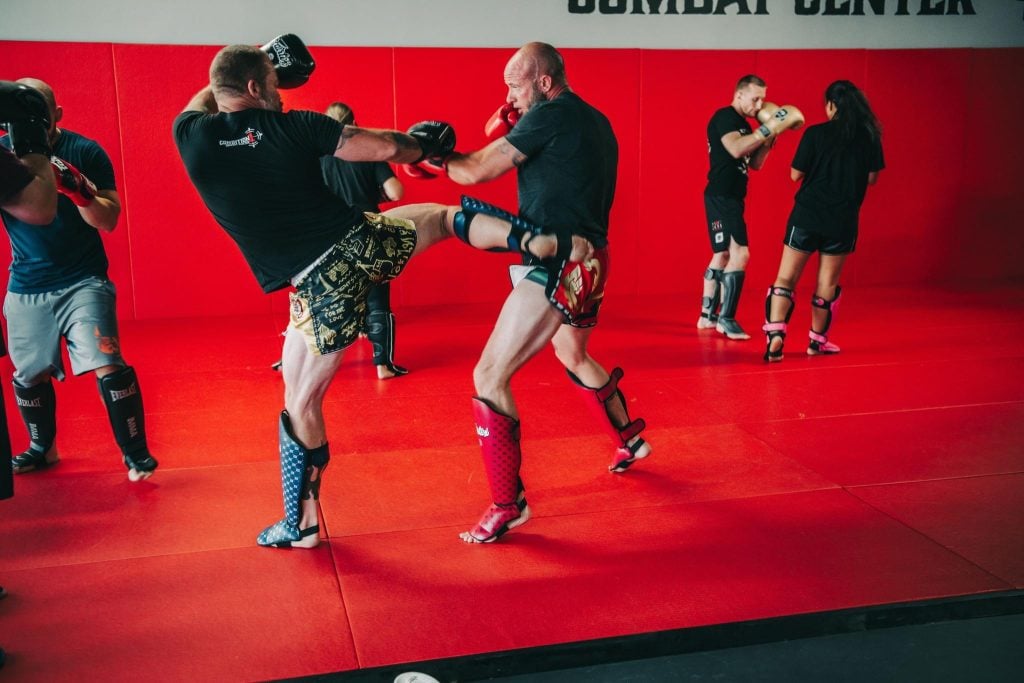
How to start your plan at Condition 1 Combat Center
You do not need an overhaul on day one. Start by mapping your current week. Identify the heavy days in Brazilian jiu jitsu training Condition 1 Combat Center, your pad and sparring days in Muay Thai and boxing, and any self defense sessions. Choose two strength qualities to prioritize for six weeks, like a hinge and a pull-up, and two mobility targets, like hips and t-spine. Place one easy aerobic session where it fits cleanly. Track sleep, morning energy, and any flare-ups.
Then, talk with a coach who sees the whole picture. The mma gym Condition 1 Combat Center staff spends time aligning lifts with skill so you do not have to guess. If you are unsure where to fit a session, bring the calendar. Ask the hard questions: will this deadlift day kill my guard passing? Is this enough conditioning to handle five rounds? Coaches who understand both physiology and the demands of BJJ, Muay Thai, and boxing will give you a straight, practical answer.
A simple checklist for your next four weeks
- Pick two lifts to improve, two mobility targets to own, and one conditioning method to build.
- Place your heaviest lifting at least 24 hours away from your hardest sparring.
- Keep one steady aerobic session each week that you can always hit, even if life gets messy.
- Log three markers: sleep time, morning energy, and resting heart rate.
- Review at the end of the month and adjust one variable, not five.
Why this approach works at a real fight gym
Cross-training done right removes friction. When you walk into the Condition 1 Combat Center mma training rooms, you do not wonder if your legs will hold up for shots or if your shoulders will survive rounds on pads. You have enough gas to apply technique, enough strength to make opponents carry your weight, and enough movement options to avoid forcing bad positions. Recovery habits keep you consistent, which is the quiet superpower that beats talent and good intentions.
There are no secrets buried in new equipment or one magic protocol. The edge comes from stacking smart pieces, week after week, with the humility to pull back before the body makes that call for you. Condition 1 Combat Center blends the structure of a performance facility with the grind of a true fight gym. Whether you are chasing competition or building a sharper, safer version of yourself, the path runs through the same three gates: strength that carries, mobility you can use, and recovery that lets you do it again tomorrow.
❧